

The truth is most athletes who get hurt during a race season don’t get hurt because they trained too hard. They get hurt because they trained inconsistently, ignored signals their body was already sending, and possibly added one thing too many at the worst possible time.
That’s the uncomfortable truth I see too many times. However, the good news is that most of those injuries were preventable. As surprising as it may be the fix is not by doing less, but by doing things smarter.
I’m Sam Englander, a Doctor of Physical Therapy based in Denver. I work with athletes across the Denver Metro area, and the principles I use in my practice can be applied to any athlete piling high training loads over a long season. Triathletes, in particular, put their bodies through something unique because you perform three mechanically different sports, on the same day, which demands a specific kind of awareness.
Your Body Has a Limit. It’s Not Fixed, But You Can Exceed It.
Think of your body like a bank account. Every training session is like making a withdrawal. Sleep, nutrition, rest days, and easier weeks are deposits. When you withdraw more than you deposit over a long enough period, you go into debt, and that debt can show up as injury.
There’s a concept in sports science called the Acute:Chronic Workload Ratio. It compares how hard you trained this week to how hard you’ve been training over the past month. When there’s a big spike, this means you suddenly do a lot more than your body is used to, and therefore your injury risk jumps.
So, how do you prevent this from happening? Ideally, you keep your week-to-week training increase at around 10% or less during your building phases. When life forces a big week, try to have the week after a true down or recovery week on purpose, instead of doing it because you are just tired.
TrainingPeaks has a free tool that helps you track this: Performance Management Chart. It is definitely worth checking out if you aren’t utilizing it already.
Strength Training Isn’t Extra. It’s What Keeps You Together.
If your training is only swimming, biking, and running, you are building your engine while slowly weakening the chassis. Endurance training without any strength work gradually reduces the capacity of your tendons, the stability of your hips, and the resilience of your lower legs.
A review published in the British Journal of Sports Medicine found that strength training significantly reduced injury rates in distance runners compared to those who only ran. The same principle holds for triathletes.
You don’t need to become a gym rat by any means. Two short sessions per week during race season is enough. Here’s what actually matters:
Lower Body
- Single-leg Romanian Deadlift: Builds hamstring and hip strength that directly supports your run mechanics. Watch a demo here
- Lateral Step Down: Builds single leg stability and glute medius strength, the hip muscles that keep your pelvis level when you run. Weak glute medius is one of the most common contributors to knee pain and hip breakdown in endurance athletes. Watch a demo here
- Rear-Foot Elevated Split Squat: Addresses hip flexor tightness from the bike while loading the posterior chain.
Upper Body and Shoulder
- Face Pull (cable or band): Essential for swimmers. Keeps the shoulder rotating correctly under the volume of your stroke.
- Banded Ts: Takes two minutes. Does a lot for shoulder blade stability, activation before activity, and long-term shoulder health. Watch a demo here
Core
- Pallof Press: Trains your core to resist rotation, which is exactly what it needs to do when you’re fatigued on the run. Watch a demo here
- Deadbug Variations: Anterior core stability without putting load through a spine that’s already been through a long ride.
Want a strength plan built around your specific race calendar? Book a Discovery Call with Dr. Sam.
Pain Is a Late Signal. Your Body Warns You Earlier.
Most athletes wait for pain before they change anything. That’s too late. By the time something hurts enough to get your attention, the problem has usually been building for weeks.
Here are the earlier signals worth paying attention to:
- Stiffness that takes more than 10 minutes to clear. If your knee or calf is stiff at the start of a session and it goes away after a mile, that’s your tendon telling you it’s under stress.
- Your pace at a given effort is getting slower. If nothing else has changed and your performance is declining, your body is accumulating more fatigue than it can clear.
- One side feels different from the other. One hip tighter. One shoulder more restricted out of the water. Asymmetry often flags where you are compensating.
- Your sleep quality drops. Research suggests that sleep disturbance is one of the earliest markers of overtraining. When athletes start sleeping poorly mid-block, it often means load is already too high.
When you notice these signals, the answer is not to stop. It’s to scale back the session, modify what’s provocative, or substitute something that maintains your fitness without pushing the irritated tissue. A reactive hip flexor doesn’t mean no running. It might mean a shorter run at easier pace on flat terrain until it settles.
You can use this free self-assessment tool to identify what might be going on: Free Self-Assessment
Stretching Before Training Doesn’t Prevent Injury. This Does.
I know this one feels wrong. But static stretching before training, the kind where you hold a position for 30 to 60 seconds, has not been shown to reduce injury risk in athletic populations. A systematic review published in the Scandinavian Journal of Medicine and Science in Sports confirmed this.
What does work is moving through your range under muscular control before you train. Your body needs to be warm, awake, and moving, not lengthened and passive.
For triathletes specifically, here are the areas that matter most:
- Hip flexors. Your bike position locks you in hip flexion for hours. If you don’t counter that with active movement, you’ll run with your pelvis tilted forward and your glutes partially turned off.
- Mid-back rotation. Swimming requires your thoracic spine to rotate. Most desk-working athletes are stiff here. When rotation is limited in the mid-back, the lower back and shoulder compensate, and that’s where problems happen.
- Ankle mobility. Limited ankle range is consistently associated with Achilles and plantar fascia issues in runners. Research published in the Journal of Orthopaedic and Sports Physical Therapy identified this as a key biomechanical risk factor.
Pre-Session Warm-Up (15 Minutes Before Any Brick or Run)
- Hip 90/90 transitions: active rotation through hip internal and external rotation, 10 each side
- Thoracic rotation in quadruped: 10 each side
- Lunge with rotation: 8 each side
- Ankle wall drill: 3 sets of 10 each side, controlled tempo.
- Glute bridge with band around knees: 2 sets of 15
Want a warm-up built specifically for your movement patterns? Download the free Daily Warm-Up and Cool-Down Routine
The Taper Window Is When a Lot of Athletes Get Hurt
This surprises people. The two to three weeks before a big race are actually a common time for acute injuries. Volume drops. You feel great. Your body is primed. And then you do something impulsive, an unplanned group ride, an extra fast set, a pace run that wasn’t on the schedule, because you feel ready.
The problem is your tissues have been under accumulated load for months. Feeling good and being structurally ready for a surprise hard effort are two different things.
Keep your taper structured. Reduce volume, keep the intensity in your scheduled sessions, and don’t add anything unplanned. The gym work doesn’t disappear in taper, it becomes lighter sets to keep your neuromuscular system engaged without adding new stress.
If Something Hurts, You Need a Decision. Not Denial.
Pushing through pain without thinking about it isn’t toughness. It’s just hope with a price tag. The average recreational endurance athlete extends their injury by weeks or months by continuing without a plan.
Here are the questions I walk athletes through:
- Can you reliably reproduce the pain? If a specific movement, load, distance always causes it, that tissue is telling you it’s at capacity.
- Is it changing how you move? Limping, bracing, or compensating redirects stress to joints and tissues that weren’t built for that load.
- Does it get better or worse during a session? Something that warms up and fades is different from pain that builds and stays elevated after training.
If you can’t answer most of those questions, that’s when having a clinical eye on it is worth more than another Google search.
If something has been nagging for more than two weeks, let’s look at it before it becomes a DNS. Book an Initial Evaluation.
What a Healthy Season Actually Looks Like
Athletes who make it through a full race season without breaking down are not the ones who trained the least. They are the ones who trained consistently, kept their strength work in the program, responded to early signals before they became real problems, and had a plan for how to scale things when their body asked for it.
That is a disciplined approach to training.
The goal is not to protect yourself from training. It’s to build a body that can handle more of it, for longer. That requires strength, active mobility, smart load management, and enough self-awareness to scale a session when the situation calls for it.
I hope this was useful. If you ever want to talk through something specific, contact me through one of the links below.
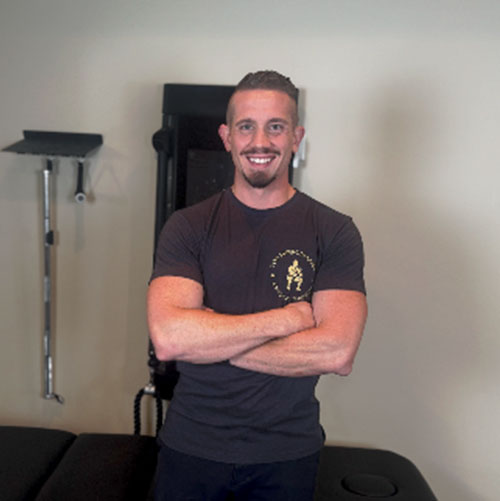
Sam Englander
PT, DPT
Sam Englander, PT, DPT is a Doctor of Physical Therapy and strength athlete based in Denver’s LoHi neighborhood. He owns Top Performance Physical Therapy, a mobile cash-based PT practice built for serious athletes who want to train hard, compete, and manage pain and fatigue without stopping what they’re doing.
He works with athletes at Iron Warrior Gym and through mobile sessions across the Denver metro.
Connect with Dr. Sam:
Book a Discovery Call
Book an Initial Evaluation
Instagram: @top_performance_pt
YouTube: @TopPerformancePT
Injury-Free Blueprint
References
1. Gosling CM et al. A profile of injuries in athletes seeking treatment during a triathlon race series. J Sci Med Sport. 2003. View study
2. Gabbett TJ. The training-injury prevention paradox: should athletes be training smarter and harder? Br J Sports Med. 2016. View study
3. Lauersen JB et al. The effectiveness of exercise interventions to prevent sports injuries. Br J Sports Med. 2014. View study
4. Meeusen R et al. Prevention, Diagnosis, and Treatment of the Overtraining Syndrome. Med Sci Sports Exerc. 2013. View study
5. Thacker SB et al. The impact of stretching on sports injury risk. Med Sci Sports Exerc. 2004. View study
6. Rabin A et al. Ankle dorsiflexion and dynamic knee valgus as risk factors for overuse lower extremity injuries. J Orthop Sports Phys Ther. 2016. View study

